The River Clyde is central to modern Glasgow’s identity. It flows through the core of the city and, as you look downstream, a moment’s reflection can lead your mind’s eye out to sea and the wider world.
A river for trade
The modern city grew around the river but Glaswegians also shaped and changed the waterway, a process encapsulated in the common maxim “Glasgow made the Clyde and the Clyde made Glasgow”.
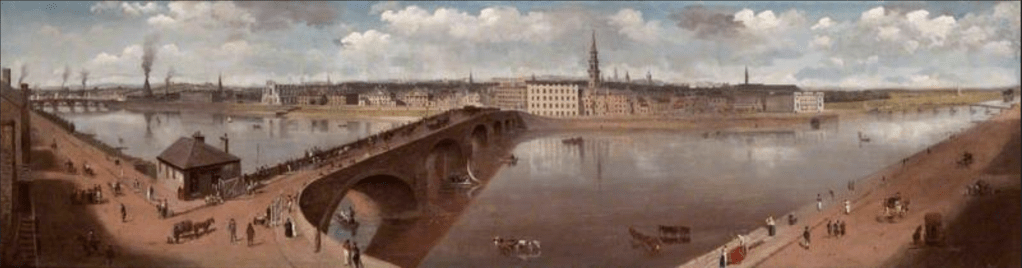
Originally a wide but fairly shallow river, in the 19th century the river was deepened, and the new channel was then kept deep with continual dredging, so the large ships used for global trade could come upriver to the city to unload goods and the Clyde shipyards could launch huge vessels for export across the world. It was a massive transformation. And as the industrialising city expanded, the Clyde and the city’s other waterways – rivers, burns and canals – became the dumping ground for industrial pollution and human waste. The Victorian Glaswegians were not oblivious to these changes. Indeed they often lamented lost beauties but in some ways this transformation was a source of perverse pride for them with the appalling state of the waterways in the city signalling their success in building a modern city, of massive wealth and global significance.
In 1896, James Bell (Baronet, and Lord Provost of Glasgow, 1892-95 and 1895-96) and James Paton (Fellow of the Linnean Society of London and President of the Museums Association of the United Kingdom) wrote in Glasgow: Its Municipal Organization and Administration, that in the late 18th century:
“The air was pure and clear, the Molendinar stream, limpid and bright, hurried down its romantic gorge, lending its flow to move the primitive machinery of the city mills, and rushing on added its tribute to the equally sweet waters of the Clyde from which many lordly salmon and lusty trout were drawn.
When they [our ancestors] began to pour their innocent trickles of household and street drainage into the wimpling Molendinar, they did not foresee the time when that romantic burn would become a stream of noisome and pestilential liquid which we are glad to have covered over and hidden from our sight. They did not foresee that each local tributary of the Clyde, and every main sewer would pour into its basin such floods of fermenting and loathsome mixtures as would make the main stream for miles nothing better than a huge open sewer and its banks an almost intolerable nuisance.”
“Truly the price we pay for our highly-organized condition of city life is very heavy!”
pp. 29, 136, 139.
Aquatic antics at the Green
It wasn’t only the salmon and trout who enjoyed the sweet waters of the pre-industrial Clyde. Residents of the city used the water for washing clothes and for washing themselves. Throughout the 19th century, despite the increased murkiness and odour of the water, Glaswegians continued to use the river for bathing and swimming. Glasgow Green was the favoured location for a dip. The Green was popular for all sorts of leisure pursuits including rowing, walking and taking the air, playing games such as cricket and football, and other events such as fairs, religious gathering, military parades and political demonstrations. Here the river was upstream of the busy shipping lanes and the dredged channels but was not immune from the pollution.

The alternative to the open water was to pay for a bath in one of the private bathhouses in the city but for factory and mill workers on a hot day – particularly Sunday afternoons – the river was free and handy. Hundreds of men and boys would gather at the Green to take a refreshing bathe in the cool water and enjoy diving, swimming and racing; what the newspapers of the day dubbed “aquatic gambolling”!
But as well as the pollution – about which the bathers did sometimes complain to the Council – they were also in danger from sudden changes in the depth of the riverbed and unexpected currents. People fell into the waterways accidentally and drownings were common. Additionally the men and boys – who usually went in nude – faced growing restrictions on when and where they could access the water due to concerns about immorality. When the tidal weir at the Green was removed in 1880, making the river more dangerous at this spot too, a near total ban was introduced on Clyde swimming.
Loss and new life
Over the 20th century the riverside became almost abandoned as the closure of the shipyards and the quays created swathes of desolate land along the banks. No longer a bustling workplace and with the Clyde estuary also losing popularity as a coastal or island holiday destination, it seemed to recede from view. But Glasgow never lost its affection for the Clyde; in fact, drawing on the work of Professor Rebecca Madgin on emotional attachment to historic urban places, I think the strength of that emotional attachment was what intensified the sadness. Again, Glasgow lamented what had been lost, re-living the old relationship through nostalgic tunes like The Song of the Clyde.
Now in the 21st century, it feels as though we are on the brink of another transformation. Fits and starts of trying to return the city’s focus to the Clyde over the past few decades have produced pockets of development – blocks of flats, riverside walkways, the SECC conference centre, the BBC studios, Glasgow Science Centre, the Riverside Museum, and Glasgow Harbour apartments – but these still squatted amidst stretches of derelict docks and abandoned quays. But finally it feels that Glasgow is now turning towards the river with new vigour, renewed vision, and, crucially, funding with a focus not only on economic regeneration but also on place-making.
The Cuningar Loop is a place for nature, leisure and living, with a school opened in 2019 called Riverbank Primary, a name chosen by the community; in the first nine months there were a million crossings of the Partick and Govan bridge opened in late 2024 at the Riverside Museum; developments like the Barclay’s campus and Clyde College Riverside have smartened the central south riverside; the quayside stretch in Glasgow city centre is due to be fancied up on both sides with the Carlton Place south bank being landscaped for wildlife and water flow control, and the Custom House Quay north bank to be better integrated with the city centre; the new Riverside Park has opened next to the Govan Graving Docks where new flats are to be built, with the hope that other developments on the site follow on afterwards; Glasgow Waters (part of the Peel Group) has plans for more housing at Yorkhill and other old quayside sites as well a possible spa complex at the junction of the Clyde and the Kelvin; and a innovative renewable energy project is using river heat to power homes and offices in Clydebank.
Some of these later developments have been funded or facilitated by Glasgow City Region. It is creating its Clyde Mission Strategic Masterplan to establish a “coordinated approach that considers the river corridor as a connected system rather than a series of individual sites” which will help “realise its full potential as an engine of sustainable and inclusive economic growth for the city, the Region and the country” all the way from inland New Lanark and Leadhills to coastal Helensburgh and Dunoon. In parallel Glasgow City Council has a variety of activities listed under a strategic plan called River Clyde 2050 which aims to support sustainable development along the “River Clyde Development Corridor” including effective approaches to managing flooding, and to “enhance and protect the townscape, heritage and environment of the River Corridor while delivering a well-connected and liveable city”. It includes a River Activation Programme for “Enhancing the city’s relationship with the river and improving access by local and wider communities.”
Commerce and community: a river for all
But could reconnecting city communities with the Clyde take us full circle? Urban outdoor swimming is enjoying a revival. It’s a phenomenon building on the surge of interest in outdoor / wild swimming and the experience of the COVID pandemic restrictions which drove town and city dwellers to whatever open water was closest to them. Across the globe, cities and towns – including previously industrial cities like Glasgow – are looking at making their open water accessible for swimmers. The Swimmable Cities Alliance is a loose association of municipalities, volunteer groups and activists sharing ideas and practices to bring swimming back to cities. It published a Charter last year with 10 principles focused on sustainability, respect for the water, wildlife and ecosystems, and making swimming accessible, safe and inclusive for all. The Alliance emphasises that making water safe and clean for bathers benefits non-swimmers too by creating a more pleasant environment, encouraging bio-diversity and green spaces, and softening cityscapes. Climate change means cities are getting warmer, but open waters help to bring down the air temperature, bankside trees offer shade, and, of course, people love a refreshing cool dip on scorching hot day. Water-based leisure can also support local businesses as visitors spend money in cafes and shops, and for other watery wellbeing services, such as saunas.
Each of the Clyde development plans has an economic mission at its core but recognises the multitude of factors that underpin the river being a truly valuable asset for the city and the region. For example, the Clyde Mission principles include climate resilience, environmental restoration, and community impact, and its transformational themes refer to improved access to nature, living well locally, and building on heritage and place identity to attract visitors. The Council’s River Clyde 2050 plan explains how it wants to the river to be “celebrated as the city’s largest, continuous open space” with “scope for increased cultural and leisure activity” and becoming a “green and resilient river that promotes health and wellbeing”. There’s mention of bringing people to the water though a reference to projects to “activate the water” seems to mean being on the water in boats, not in the water. The River Activation Programme talks of “Enhancing the city’s relationship with the River and improving access by local and wider communities” while the list of types of projects includes “Other projects and activities that reconnect the city with the water space.” This is a careful tone, positioning people on the sides of the Clyde and envisaging it primarily as a corridor or connecting space. Swimmable Cities, however, encourages municipalities to think about their open waters as civic spaces, places owned by the citizens and which should be available to them in the same way that town squares and parks are.
A space for swimmers?
Immersion in water is a unique way to experience an urban environment and has some very specific advantages as a healthy exercise. As long as there’s a way to get in and out of the water it’s an activity that can be very inclusive of age, disability, and income – all you really need are bathers and an old towel – and it enables the practice of a potentially life-saving skill. As well as good physical exercise, it can be meditative, calming and a way to slow down, taking you out of the normal to-and-fro and into a special and soothing environment. Different cities will develop their best options for their waters and swimming cultures. Effective approaches can range from simply putting in ladders, providing a water quality monitoring app, and installing some buoys in the river to separate swimmers from boats, to building large floating swimming pools with lifeguards and water filtration systems. Just a few places that have already found different ways to open up their water for swimming are Paris, Copenhagen, Rotterdam, Basel and London. However it’s also crucial to remember that Glasgow has also lost local swimming pools, many of which were places that the Victorian swimmers went to swim in safer environments that were handier for their homes. Govanhill Baths closed in 2001 in the face of community opposition and Whitehill Baths has been closed for three years due to structural problems, again the focus for community campaigning. An outdoor swimming space for Glasgow should be an enhancement – not a replacement – for safe, inexpensive local facilities.
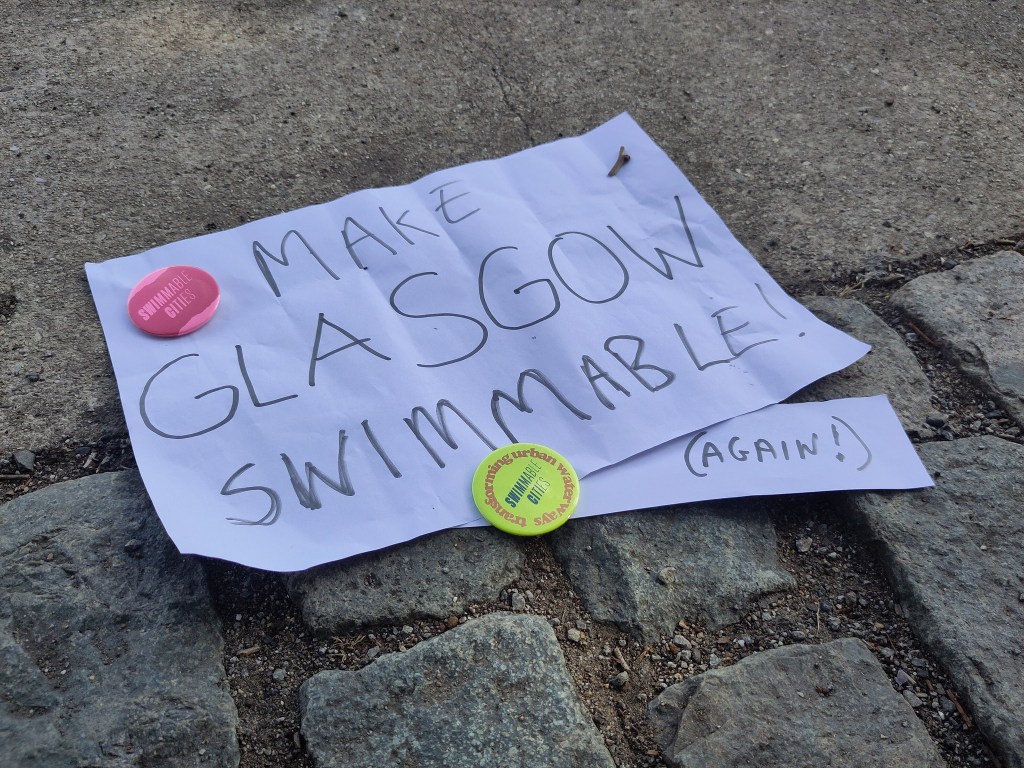
The issues that the early swimmers faced in Glasgow are still barriers to diving in today. The water quality is much improved since the the 1970s with the Clyde River Foundation describing it as “recovering river”. But that doesn’t mean the water is free from contaminants, debris, and unsanitary rubbish. There are dangerous, varied depths, and unexpected currents. And, again, we are in a situation where many people are not able to swim, or do not have the water literacy skills to judge if is safe for them to go in the water in particular circumstances. In 2021, 106 people drowned in Scotland, prompting the creation of the Water Safety Action Plan 2022-2026. By 2024 water-related fatalities were down to 78 – of which 33 were accidental – a significant reduction from 63 in 2021 but the numbers rose again in 2025 to 39 accidental deaths, 55% at in inland locations such as rivers, lochs, reservoirs and canals. The tragedies reported from across the UK and Europe in the recent heatwaves demonstrate that when it’s hot – and summers in the city will only get hotter in forthcoming years – people are drawn to cool off in rivers and lochs in the same way as the 19th century bathers. But just as they formed affordable clubs to provide swimming and lifesaving lessons, and installed lifebuoys and depth signs on the riverbanks, we too can take steps to help people stay safe. Scotland has a new Water Safety Code to help people understand the potential dangers, effectively judge if it’s safe for them, and know what to do if they accidentally fall in. On World Drowning Prevention Day this year (25 July) Water Safety Scotland will publish the country’s new drowning prevention strategy. And there’s lots more we could do for water literacy.
Future flows
The Who Owns the Clyde? podcast has thrown a light on issues of land ownership, water stewardship and river rights, a conversation that is going on around the world where rivers are being neglected, damaged or under threat of obliteration.

Now Clyde Alive, “a project by a group of Glasgow-based artists and activists to radically reimagine our relationship with the river” is taking Bonnie the giant salmon around the city and asking questions like:
“What if we could swim in the Clyde? What if we daylight buried streams? What if we clean up contaminated sites? What if we listen to the river’s needs?“
After turning the waterways into open sewers and chemical dumps and burying many of the burns including St Mungo’s Molendinar below the city streets the Victorians finally started clean up some of their mess:
“The experience of sewage purification at Dalmarnock is completely satisfactory. It is demonstrated that, at reasonable cost, the Clyde and its tributaries can be again rendered tolerably wholesome and sightly, though we may not yet look for salmon in the much-churned water of the river, nor hope to see trout leaping in the Kelvin as it flows though Kelvingrove Park.”
James Bell and James Paton, Glasgow: Its Municipal Organization and Administration, 1896, pp. 144-145
They would be astonished to know that salmon have been seen in the Clyde since 1983 and that each year thousands of schoolchildren raise trout to release into the river.
But if they could glimpse a different fate for the Clyde from the one they had made for it, so too can today’s Glaswegians. The salmon have remembered the past and returned to the river: so too could the swimmers.
If you’d like to hear more from me on the history of outdoor swimming in Glasgow these two opportunities are coming up:
The People’s Pool – Radio 4
Archive on 4 programme exploring the fight to save the Govanhill Baths and the wider story of public baths and wash houses in Britain. Broadcast Saturday 25 July 2026, 8pm, on BBC Radio 4.
Digger Deeper: Quickfire talks from the River Clyde.
A series of quick-fire talks from people researching the history of Glasgow’s River Clyde in surprising and interesting ways. Part of the Watershed Festival. Friday 31 July, 6pm, The Briggait, Glasgow, free!

